
Crawl Spaces
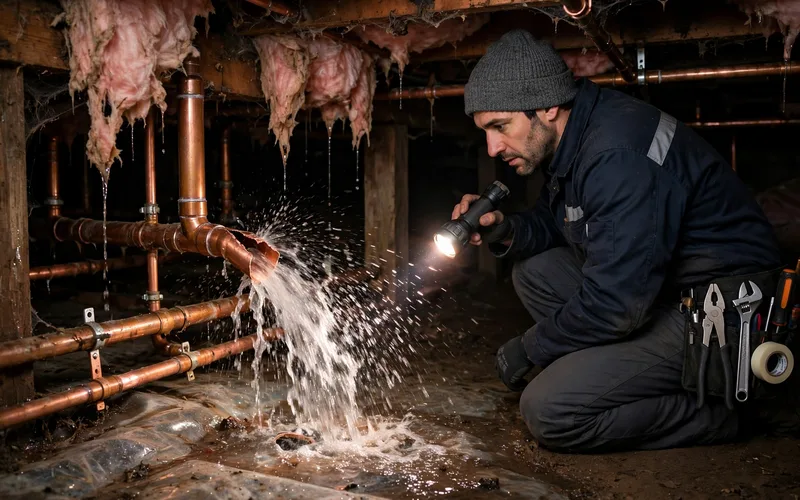
Most Kelso homes stand on crawl spaces, and the pipes running through them are exposed to outside air. A burst here floods the space unseen and soaks the subfloor from below.
Kelso cold snaps split pipes in crawl spaces, exterior walls and attics, and the split is usually found at the thaw, when water has been running for hours. January mean lows run 29 to 35 degrees, freezing nights stretch from late November to early April, and Kelso has recorded minus 1 degree. Call (877) 659-0178 to shut the water off, extract it, and dry the damage.
Call (877) 659-0178 for burst pipe repair anywhere in Kelso, WA. Shut off the water at the main if you can do it safely, then call. Water is extracted, the structure is dried with air movers and dehumidifiers, and the damage is repaired once moisture readings show it is dry.
Not sure it is a burst pipe? Read about frozen pipes and what to do when a tap runs dry, or see why a burst pipe in a crawl space does the most damage unseen. If water is running now, call first.
A burst pipe is a freeze problem before it is a plumbing problem. Water expands as it freezes, and the pressure splits the pipe at its weakest point, usually where the pipe is coldest and least protected. In Kelso, that means the crawl space, the exterior wall and the attic.
Kelso's January mean low runs 29 to 35 degrees, and the city has recorded minus 1 degree. Freezing nights stretch from late November to early April, and a hard cold snap can freeze an unprotected pipe in a single night. The split is usually found at the thaw, when the ice melts and water runs freely through the break.
The median Kelso home was built in 1963, and about three in four homes predate 1980. Many still carry galvanized and copper lines, and older galvanized pipe corrodes from the inside, narrowing the bore and weakening the wall. A corroded line splits sooner than a sound one.
The coldest, least protected runs burst first.
Most Kelso homes stand on crawl spaces, and the pipes running through them are exposed to outside air. A burst here floods the space unseen and soaks the subfloor from below.
Pipes in exterior walls sit a few inches from outside air, with only siding and insulation between them and the cold. Kitchen and bathroom sinks on outside walls are the usual victims.
Attic pipes freeze when insulation is thin or missing, and a burst in the attic rains water through the ceiling below. The damage is often found as a stain, days later.
Pipes in garages, laundry rooms and unheated additions freeze first, because the room itself drops below freezing on a cold night.
An outdoor tap left connected to a hose in winter traps water in the line, and the freeze splits the pipe inside the wall.
Sink cabinets against outside walls stay cold with the doors shut, and the supply lines inside freeze on the coldest nights. Opening the cabinet doors on a freeze night helps.
Shut off the water at the main if you can do it safely. The main shutoff is usually where the water line enters the home, often in a crawl space, garage or utility area. If water is near outlets or appliances, cut power to the wet area if you can reach the breaker safely.
Then move valuables and dry furniture out of the water, take photos for your insurance claim, and call (877) 659-0178. Describe where the water is coming from, whether it is still running, and which rooms are affected. Do not use a household vacuum on standing water.
The order is fixed: water off, water out, dry, then repair. The pipe is only part of the job; the water it released is the larger part.
The water is shut off at the main, then pumps and extractors remove standing water from floors, and from the crawl space if the burst is below the house.
Air movers and dehumidifiers dry walls, floors, framing and the crawl space, with moisture readings checked until the structure is dry. A burst pipe soaks more than the room it flooded.
Damaged drywall, flooring and trim are repaired once drying is confirmed, and the burst pipe is repaired or replaced. Insulating exposed runs and finding the main shutoff before winter stops the next one.
A burst pipe is the end of a freeze story that starts earlier. These pages cover the freeze itself, and the crawl space damage that a burst pipe leaves behind. Coverage is Kelso only, across the Kelso service area, and the full list is on the services hub.
No water from a tap on a cold morning, or a pipe that burst when the freeze lifted. How to thaw safely, what to shut off first, and how to protect Kelso crawl space pipes.
Frozen pipes: what to doA burst below the house floods the crawl space unseen and soaks the subfloor from below. How it is found, dried and repaired.
Burst pipe in a crawl spaceWater still spreading, deep or rising counts as an emergency. Extraction is the priority, because every hour water sits it soaks deeper.
Emergency water extraction in KelsoKelso cold snaps freeze unprotected pipes in crawl spaces, exterior walls and attics. Water expands as it freezes, and the pressure splits the pipe at its weakest point. Many Kelso homes still carry galvanized and copper lines that split sooner than newer pipe.
Shut off the water at the main if you can do it safely, and cut power to the wet area if water is near outlets or appliances. Move valuables out of the water, take photos for insurance, and call (877) 659-0178. Describe where the water is coming from and whether it is still running.
In crawl spaces, exterior walls and attics, where pipes are exposed to outside air and least protected. Most Kelso homes stand on crawl spaces, so a burst below the house is the most common pattern, and the water floods the space unseen.
It is usually where the water line enters the home, often in a crawl space, garage or utility area. In Kelso's older homes it is commonly in the crawl space or near the water heater. Find it before winter, and make sure everyone in the household knows where it is.
Most homeowners policies cover sudden and accidental water damage, such as a burst pipe, including the water damage it causes. They usually exclude damage from a pipe that burst because the home was left unheated, and gradual leaks from wear. Your policy wording decides, so document the damage with photos.
In most cases, yes. Insulate exposed pipes in crawl spaces, exterior walls and attics, disconnect hoses from outdoor taps before winter, open cabinet doors under sinks on outside walls during a freeze, and keep the home heated through cold snaps.
It depends on how much water escaped and how long it ran before the main was shut off. A small leak in one room can dry in a few days with professional equipment, while a burst that flooded a crawl space or multiple rooms takes longer. Drying is finished when moisture readings show the structure is dry.
A burst pipe runs until the main is shut off, and the water it releases soaks deeper every hour. Call (877) 659-0178, describe where the water is coming from, and get extraction, drying and repair started in Kelso, ZIP 98626.
Call (877) 659-0178