

Atmospheric River Storms
Inches of rain in a single day overwhelm gutters, drainage and roofs. December is the wettest month, and the storms that matter most arrive from October to March.
Kelso sits on a diked floodplain where the Cowlitz meets the Columbia, and about 48 inches of rain a year falls mostly between October and March. When an atmospheric river storm overwhelms gutters and drainage, or a rising river pushes groundwater into basements and crawl spaces, flood water has to come out fast. Call (877) 659-0178 for flood cleanup anywhere in Kelso, ZIP 98626.
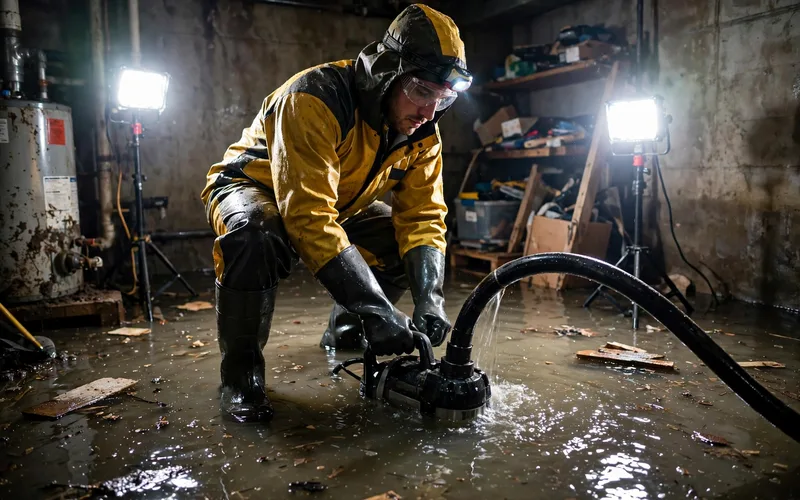
Call (877) 659-0178 for flood water extraction anywhere in Kelso, WA. Pumps remove standing water first, then air movers and dehumidifiers dry the structure, and moisture readings confirm when it is dry. Mold can start within 24 to 48 hours, so extraction should not wait for the water to dry on its own.
If water is in your home now, read what to do after flooding for the first steps, or see why Kelso floods the way it does on the Kelso flood history page. If the water is still rising, call first.
Kelso is a river city on a diked floodplain at about 13 feet of elevation, where the Cowlitz, the Columbia and the Coweeman meet. The dikes, raised by the US Army Corps of Engineers after the 1980 eruption of Mt. St. Helens, protect against floods larger than the 100 year event.
About 48 inches of rain falls on Kelso in a year, across roughly 180 wet days, with the wettest months from November to January. Atmospheric river storms can drop inches of rain in a single day. When the Cowlitz runs high, the valley water table rises with it, pushing groundwater through slab cracks, cove joints and floor drains into basements and crawl spaces even when the dikes hold.
Kelso has flooded before, and the record is part of why the city is diked. The Cowlitz peaked at 29.5 feet at Kelso in February 1996, South Kelso was inundated in December 1933, and the Allen Street Bridge collapsed in the flood of January 1923. The December 2025 atmospheric river brought basement flooding across the valley. Read the full story on the Kelso flood history page.
Most flood calls in Kelso trace back to the same set of causes.
Inches of rain in a single day overwhelm gutters, drainage and roofs. December is the wettest month, and the storms that matter most arrive from October to March.
High water on the Cowlitz raises the valley water table, pushing groundwater into basements and crawl spaces through cracks and joints, even when the dikes hold.
Hydrostatic pressure, window wells and floor drains let storm water into Kelso basements. December 2025 showed how fast a basement can fill in this valley.
High duty cycle pumps are overwhelmed by groundwater volume, killed by storm power outages, or stopped by frozen discharge lines. A failed pump in a storm can flood a basement in hours.
Gutters and downspouts that cannot carry a storm's rain dump water against foundations, where it finds its way into crawl spaces and basements.
Pressurized groundwater infiltrates aging clay and early PVC laterals during wet months, and the overwhelmed system backs sewage up through floor drains.
Professionals classify water by contamination, and the category changes how the job is handled. The category is checked on arrival, before extraction begins.
Water from a broken supply pipe or a clean appliance overflow. The lowest risk, and the most likely to be dried in place without removing materials.
Water from dishwashers, washing machines and similar sources. It carries significant contamination, and porous materials it soaks usually cannot be saved.
Water from sewage, flood water from outside, and standing water past 48 hours. It carries pathogens, needs protective handling, and soaked porous materials are discarded.
The order is fixed: water out first, then drying, then repair. Extraction makes the rest of the job possible, and skipping straight to drying wastes days.
Call (877) 659-0178 and describe the water: how deep it is, which rooms are affected, whether it is still rising, and whether it smells of sewage. On arrival, the source, depth and water category are checked.
Pumps remove deep water, then extractors pull absorbed water from floors and carpets. Soaked carpet padding, swollen drywall and contaminated porous materials are cut out where needed.
Air movers and dehumidifiers dry walls, floors and framing over several days, with moisture readings checked until dry standards are met. Cleaning and disinfection follow where the water was gray or black, and repair comes after drying is confirmed.
Most people do not search for a service name. They search for what is happening in their home. These pages sit inside the flood service, with the likely causes and the point where it is time to call. The full list of services is on the services hub, and coverage is Kelso only, across the Kelso service area.
The first 24 hours after a flood decide how much of your home is saved. Shutoffs, safety, photos for insurance and the order that matters, written for Kelso homes.
After flooding: first stepsBasement floods are a documented Kelso pattern: hydrostatic pressure, window wells, floor drains and sump failures after big storms.
Basement flooding in KelsoWater still spreading, deep or rising, or contaminated counts as an emergency. Extraction is the priority, because every hour water sits it soaks deeper.
Emergency water extraction in KelsoAs soon as it is safe. Standing water soaks deeper into floors, walls and subfloors every hour it sits, and mold can begin on damp materials within 24 to 48 hours. Extraction is the first step, and it should not wait for the water to dry on its own.
Submersible pumps for deep standing water, high volume vacuum extractors for carpets and hard floors, and then air movers and dehumidifiers for structural drying. Household fans and shop vacuums cannot match that capacity on a flooded room.
For a tiny patch of clean water, yes. For a flooded room, no: a shop vacuum holds a few gallons, cannot reach water inside walls and subfloors, and cannot confirm when the structure is actually dry. Standing water near electrics is also a safety risk that needs professional handling.
It can be. Clean water from a supply pipe is the lowest risk. Gray water and black water from sewage, flood water or standing water past 48 hours carry contaminants and should not be handled without protective equipment. If the water smells of sewage or came from outside, stay out of it and call (877) 659-0178.
It depends on the source. Sudden and accidental internal damage, such as a burst pipe or an appliance failure, is usually covered by a standard policy. External flooding, rising water and storm surge are excluded and need separate flood insurance through the NFIP. Sewer backup usually needs an endorsement.
Structural drying with air movers and dehumidifiers, moisture readings until dry standards are met, cleaning and disinfection where needed, and then repair of materials that were removed. Extraction alone is not restoration: drying and repair must follow.
Only about 1.6 percent of Kelso addresses sit in the FEMA Special Flood Hazard Area, and the city has been in the National Flood Insurance Program since 1979, with dikes that protect against floods larger than the 100 year event. Most flood damage in Kelso homes comes from heavy rain and groundwater rather than river water overtopping the dikes.
Flood water soaks deeper every hour it sits, and mold can start within 24 to 48 hours. One call to (877) 659-0178 covers extraction, drying and repair anywhere in Kelso, ZIP 98626.
Call (877) 659-0178